20TH CENTURY FOXTROTS, VOL. 1: AUSTRIA & CZECHIA
Grand Piano GP813
Gottlieb Wallisch, piano
Release 14 febrary 2020
* World Première Recording
Total Time : 1:09:32


During the inter-war period, in the cities of the West, a younger generation found ways to enjoy life in the form of dances such as shimmies, foxtrots, tangos and Charlestons: strong rhythms that became a symbol of a carefree and decadent era. The new jazz craze took hold everywhere, and Krenek’s opera Jonny spielt auf became an overnight sensation. The inter-war Zeitgeist in Vienna and the Czech lands is reflected in a programme full of première recordings – many of which were hits in their day – rich with fashionable dynamism, syncopation and joie de vivre. Born in Vienna, Gottlieb Wallisch first appeared on the concert platform when he was seven years old, and at the age of twelve made his debut in the Golden Hall of the Vienna Musikverein. A concert directed by Yehudi Menuhin in 1996 launched Wallisch’s international career: accompanied by the Sinfonia Varsovia, the seventeen-year-old pianist performed Beethoven’s ‘Emperor’ Concerto. Since then Wallisch has received invitations to the world’s most prestigious concert halls and festivals including Carnegie Hall in New York, Wigmore Hall in London, the Cologne Philharmonie, the Tonhalle Zurich, and the NCPA in Beijing, also the Ruhr Piano Festival, the Beethovenfest in Bonn, the Festivals of Lucerne and Salzburg, December Nights in Moscow, and the Singapore Arts Festival

Ernst Krenek : Potpourri aus der Oper Jonny spielt auf (Potpourri from the Opera Jonny Strikes Up) (arr. J. Takács for piano) (1925) ( 36:00 )
  1. Shimmy * ( 1:29)
  2. Blues * ( 2:38)
  3. Tango * ( 1:31)
  4. Der Sprung über den Schatten (The Leap Over the Shadow), Op. 17: Foxtrot (arr. G. Blasser for piano) (1923) * ( 3:17)
  5. Julius Bittner : Shimmy auf den Namen Bach (Shimmy on the Name Bach) (1924) * ( 1:58)
Ralph Benatzky : Die Fünf Wünsche (The Five Wishes) (arr. for piano) (1928) ( 9:00 )
  6. Flirt, Slowfox * ( 1:27)
  7. L'Heure bleue, Boston * ( 3:21)
  8. Tango macabre * ( 3:56)
  9. Franz Mittler : Foolish Spring, Foxtrot (1934) * ( 3:42)
Wilhelm Grosz : Baby in der Bar, Op. 23 (arr. G. Blasser for piano) (1928) ( 6:00 )
10. Shimmy * ( 2:51)
11. Tango * ( 3:19)
12. Leopold Krauss-Elka : Thannhäuser-Foxtrot, Op. 33, "Lied an den morgenstern" (Song to the Morning Star) (1921) * ( 2:11)
13. Hanns Eisler : Shymmy-Tempo (1926) * ( 0:59)
14. Felix Petyrek : Illusion, Foxtrot (1922) * ( 3:24)
15. Arizona-Foxtrot (1924) * ( 1:54)
16. Jaroslav Ježek : Bugatti-Step () ( 2:58)
17. Ozvěny z music-hallu (Echoes of the Music Hall), Foxtrot (1936) * ( 1:59)
Alois Hába : 4 Moderní tance, Op. 39 () ( 18:00 )
18. No. 1. Shimmy-Blues ( 2:02)
19. No. 2. Blues ( 3:14)
20. No. 3. Boston ( 3:01)
21. No. 4. Tango ( 2:12)
Bohuslav Martinů
22. Foxtrot, H. 126bis (1920) ( 2:35)
23. One-step, H. 127bis (1921) * ( 1:26)
24. Black Bottom, H. 165 (1927) ( 0:53)
25. Karel Boleslav Jirák : The Kingdom of Heaven, Slow Foxtrot (Blues) (1929) * ( 3:30)
26. Jaromír Weinberger :Matěj Poctivý: City Shimmy () * ( 1:52)
Erwin Schulhoff : 2 Excerpts from Suite For Chamber Orchestra, WV 58, Op. 37 (1921) Arr. For Piano, 1925) (5:53)
27. No. 1. Valse Boston * (3:30)
28. No. 2. Shimmy-Fox * (2:23)


The Artist

Gottlieb Wallisch
Gottlieb Wallisch has made numerous recordings for labels such as LINN records,
Deutsche Grammophon and Alpha Classics. In 2012 Steinway & Sons added his name to their roster of Steinway Artists.
In 2010 Gottlieb Wallisch became the youngest professor at the Geneva University for Music; the Berlin University of Arts (UdK Berlin) named him professor for piano in 2016.

The Composer(s)

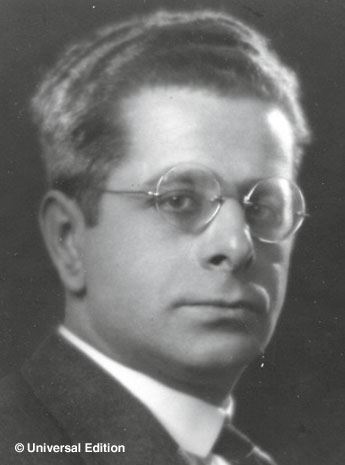
Julius Bittner
Julius Bittner
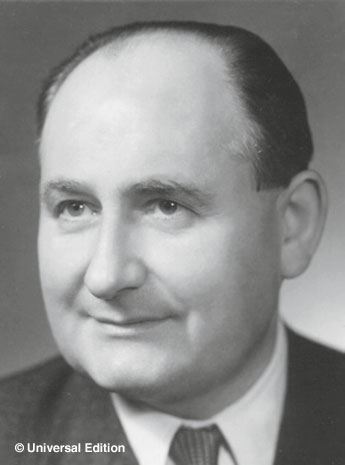
Wilhelm Grosz
Wilhelm Grosz
Alois Hába
Alois Hába
Alois Hába left his mark in modern classical music especially with his harmonic theories and microtonal pieces.
A pupil of Reger, as Weinberger and Schulhoff were, he composed also some diatonic works, expressing a neo-Romantic idiom, with hints of the folk music of his native Valašsko region.
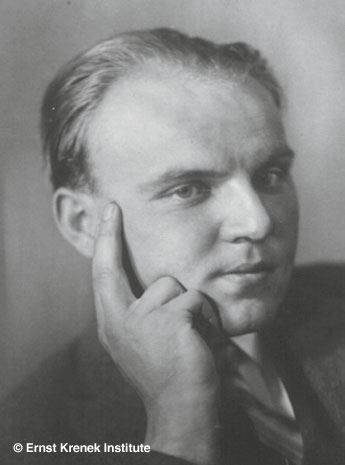
Ernst Krenek
Ernst Krenek
Ernst Krenek’s compositions of the 1920s won him a reputation as an enfant terrible, bringing international success with his jazz opera Jonny spielt auf, and in the 1930s
a change to serial composition, notably in the opera Karl V, withdrawn through political intrigue from a planned staging in Vienna in 1934.
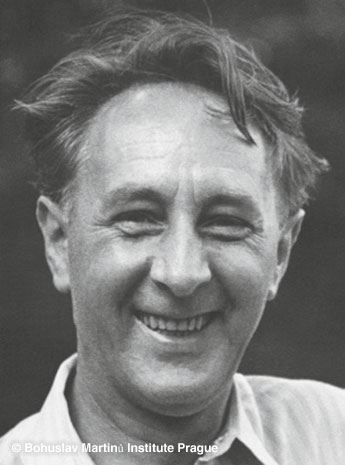
Bohuslav Martinů
Bohuslav Martinů
Born in a church tower in the Bohemian country town of Polička, Bohuslav Martinů was a prolific enough composer as a child, before he entered Prague Conservatory as a violin student in 1906.
His interest, however, lay in composition. Failing to complete his course at the Conservatory or at the Prague Organ School, to which he had been transferred, he worked as an orchestral player before moving, in 1923, to Paris.
The approach of the German armies in 1940 forced him to make his way, as best he could, to the United States, where he was encouraged by commissions from Koussevitzky.
Political events in Czechoslovakia prevented his intended return after the war; he spent his final years abroad, dying in Switzerland in 1959.
Franz Mittler
Franz Mittler
Franz Mittler, equally proficient as an accompanist, was a child prodigy as a composer, and in the 1930s became musical assistant to Karl Kraus.
Erwin Schulhoff
Erwin Schulhoff
Erwin Schulhoff was born in Prague on 8 June 1894 and showed musical ability from an early age.
A musical career was decided upon on the recommendation of no less than Antonín Dvorák, and Schulhoff studied at the Prague Conservatory from 1904,
followed by piano tuition in Vienna from 1906 then composition in Leipzig with Max Reger from 1908 and subsequently in Cologne with Fritz Steinbach from 1911.
In the meantime he had laid the basis of a career as a pianist, while his efforts at composing were rewarded with the Mendelssohn Prize in 1918 for a piano sonata.
His music up to the First World War had shown the expected influences from Brahms and Dvorák, and by way of Strauss, to Debussy and Scriabin, but four years in the Austrian army saw him adopt a more radical stance artistically and politically.
In the next few years he absorbed the values of the Expressionism represented by Schoenberg and the Second Viennese School as well as the Dadaism espoused by Georg Grosz, whose advocacy of jazz was to find its way into much of Schulhoff’s music from that period.
Jaromír Weinberger
Jaromír Weinberger
A gifted child, the Bohemian composer Jaromír Weinberger studied at the Prague Conservatory with Vitězslav Novák and then with Max Reger in Leipzig, pursuing an early career as a conductor and pianist.
He wrote music in particular for the theatre and, during a period teaching in America, sought to emulate Dvořák in a planned ‘Union Rhapsody’, a purpose never realised.
At home he became briefly director of the opera in Bratislava and director of the Cheb Music School before moving to Prague.
Compelled to emigrate after the Anschluss, he returned to America in 1939, settling in Florida where his later depression led to suicide.